Theranos and the $9 Billion Fraud Silicon Valley Refused to See
Elizabeth Holmes raised $945 million for a blood-testing technology that never worked. Her board included two former US Secretaries of State, a four-star general, and a former US Defense Secretary. Not one of them was a doctor.
By The Biz Vault Editorial
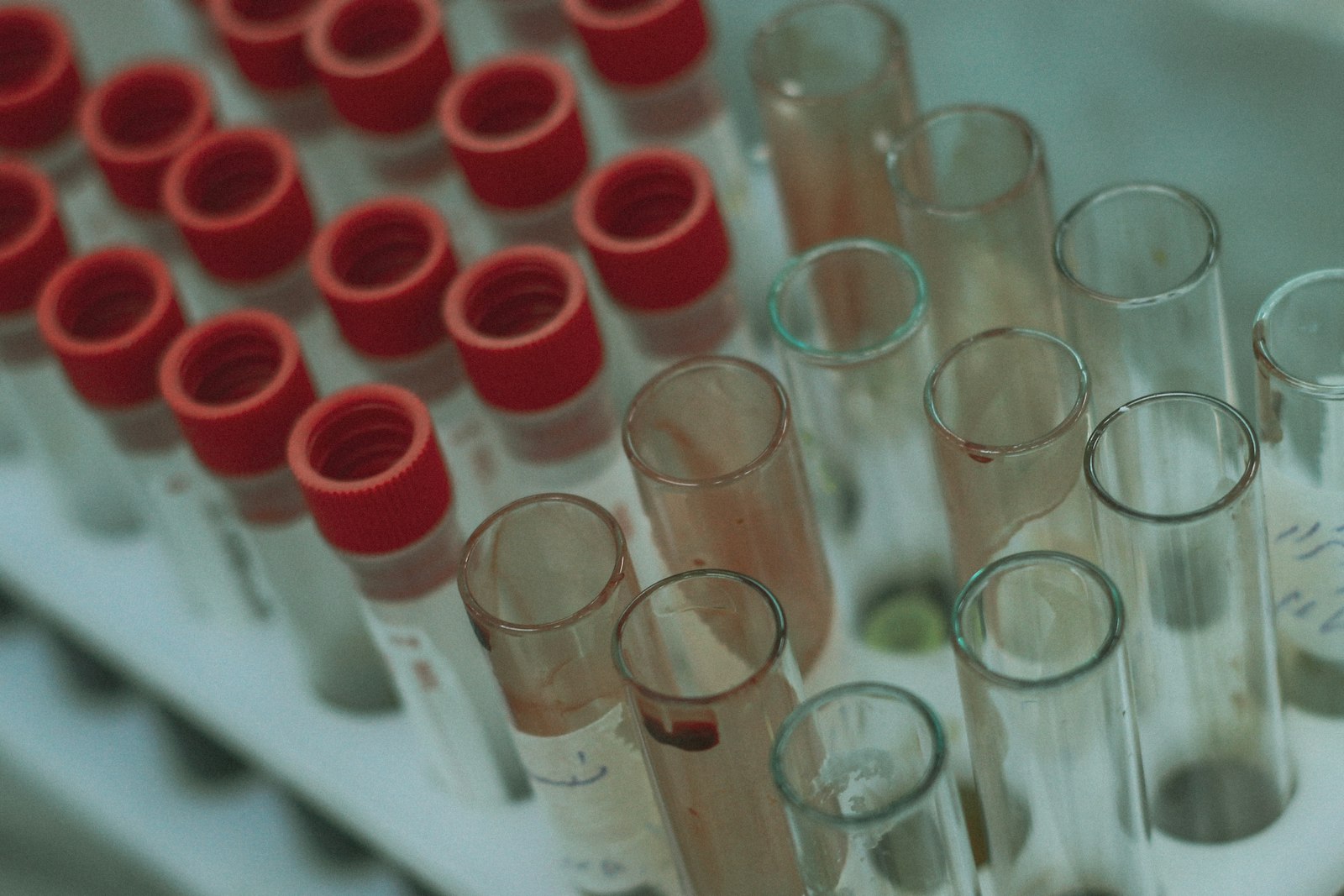
In 2003, a nineteen-year-old Stanford sophomore named Elizabeth Holmes dropped out of school to start a company. Her pitch was that she had invented a blood-testing technology — using just a finger-prick of blood instead of a full vial — that could run hundreds of diagnostic tests at a fraction of the cost of conventional laboratory testing. Her company, Theranos, would put a small device in every American pharmacy, every doctor's office, every home. The healthcare industry would be transformed.
The technology never worked. Across the company's fifteen-year run, no version of the Theranos device — code-named Edison, then 4S, then miniLab — was ever capable of delivering accurate results across the test menu Holmes claimed it could perform. The company's actual blood tests, when they were run, were largely processed on conventional commercial machines that Theranos had purchased from German manufacturers and hidden from regulators. Some of the patient results released over the years were so wildly inaccurate that they led to misdiagnoses, including for serious conditions like cancer.
In 2014, at the height of her fundraising, Elizabeth Holmes was thirty years old, the youngest self-made female billionaire in the world, on the cover of Forbes, Fortune, and Inc., and was holding a controlling stake in a company valued at approximately nine billion dollars. By 2018, the company was insolvent and Holmes had been indicted on multiple counts of wire fraud. The story of how the gap between those two facts went undetected for so long is, more than the technology itself, the actual subject worth studying.
The board that should have been impossible to assemble
The single most consistently puzzling feature of Theranos, to anyone reviewing the case in retrospect, is the board of directors Holmes assembled. By 2014, the board included:
- Henry Kissinger, former US Secretary of State.
- George Shultz, former US Secretary of State and former US Treasury Secretary.
- William Perry, former US Defense Secretary.
- Sam Nunn, former US Senator and chair of the Senate Armed Services Committee.
- James Mattis, retired four-star Marine Corps general (later US Defense Secretary).
- William Foege, former director of the US Centers for Disease Control.
- Richard Kovacevich, former CEO of Wells Fargo.
It was, by most measures, the most impressive board of directors ever assembled by a private healthcare company at the comparable stage. It was also, with one exception (Foege), a board with essentially no expertise in the medical-device industry, the in-vitro diagnostics market, or the regulatory environment Theranos was claiming to operate in. The members were, almost without exception, people who had spent their careers in foreign policy and military strategy. The technical due diligence on the company's blood-testing claims was, in the strict sense of the term, performed by no one on the board.
This is a recurring pattern in investment fraud and is worth naming directly. A board of obviously prestigious figures, whose names lend the company credibility, but whose actual expertise is in domains entirely unrelated to the company's technical claims, can function as a substitute for due diligence rather than a means of conducting it. Investors looking at the board do not investigate the technology, because the implicit signal is that the board has already done so. The board, in turn, defers to the CEO on technical matters, because none of them are equipped to evaluate the claims independently.
The fundraising that bypassed healthcare investors
The second structural pattern that enabled Theranos was Holmes's deliberate avoidance of the investors who would have understood the technology.
The healthcare investment community in the United States is small, deeply networked, and aggressive in its due-diligence practices. A blood-testing technology that claimed to do what Theranos claimed would have been put through extensive technical review by the partners at the major life-sciences venture firms — firms whose investment teams routinely include MDs, PhDs in biochemistry, and former diagnostic-industry executives. This review would, almost certainly, have surfaced the basic problems with Theranos's technology within days.
Holmes never approached those firms. The investors who funded Theranos's major rounds were almost entirely outside the healthcare-investment ecosystem: family offices (notably Larry Ellison and the Walton family), individual high-net-worth investors (Rupert Murdoch invested $125 million; Betsy DeVos's family invested $100 million), and investment vehicles managed by people whose technical due-diligence capacity in diagnostics was effectively zero.
The investors who eventually lost the most money in Theranos shared a profile: enormously successful in fields entirely unrelated to medical diagnostics, accustomed to making investment decisions on the basis of trust in the founder's narrative, and not in the habit of running their own deep technical due diligence on the underlying claims. Holmes raised approximately $945 million from this group between 2010 and 2015, at valuations that escalated rapidly each round, with no significant outside scientific verification of the company's central claim.
The Wall Street Journal investigation
The story broke not because of an investor demanding proof, not because of a regulator's audit, but because of a journalist named John Carreyrou, who in 2015 began receiving tips from former Theranos employees that the company's technology did not actually work.
The reporting that followed — published by Carreyrou in the Wall Street Journal in October 2015 and developed across more than two years of subsequent articles — was the most consequential piece of business journalism of the 2010s. Carreyrou documented, in exhaustive detail, that Theranos had been running its commercial blood tests on traditional Siemens machines hidden from regulators, that the actual Edison device was inaccurate to the point of being clinically dangerous, and that the company had been falsifying results presented to investors and partners.
Theranos's response to Carreyrou's reporting was, for almost two years, denial and intimidation. The company hired David Boies — one of the most expensive litigation attorneys in the United States — and sued or threatened to sue former employees who had spoken to the journal. Holmes appeared on television to declare the reporting wrong. Walgreens, which had partnered with Theranos to deploy blood-testing centres in its pharmacies, continued the partnership for over a year after Carreyrou's first article.
The collapse came when the federal regulators caught up. In 2016, the Centers for Medicare and Medicaid Services revoked Theranos's licence to operate a clinical laboratory and banned Holmes from owning or operating one for two years. In 2018, the Securities and Exchange Commission charged Holmes with massive fraud. Later that year, Theranos voluntarily dissolved. In 2022, Holmes was convicted on four counts of wire fraud and conspiracy to commit wire fraud. She was sentenced to eleven years in federal prison.
What the case actually demonstrates
The Theranos story is sometimes told as a parable about Silicon Valley's "fake it till you make it" culture — about the dangers of charismatic founders selling visions before products. This is not wrong, but it is shallow.
The deeper lesson of Theranos is about the structural conditions that allowed the fraud to scale. Holmes did not get away with it for fifteen years because she was uniquely persuasive (though she was). She got away with it because she had built — deliberately, over years — a set of institutional defences that prevented anyone with the technical competence to evaluate her claims from being in a position to do so.
The board lacked the expertise. The investors lacked the diligence framework. The press, until Carreyrou, had been writing celebratory profiles. The regulators had been slow because the company had aggressively concealed its actual operations. Each of these failures was structural rather than personal — the kind of failure that compounds across institutions when no individual is responsible for catching it.
The pattern recurs. Almost every large fraud — from the South Sea bubble to Enron to Bernard Madoff to FTX — has worked, fundamentally, by exploiting the same structural blind spots. A founder with a compelling narrative, surrounded by prestigious figures whose actual expertise is elsewhere, raising money from investors operating outside their domain of competence, with a press corps that finds the founder's story too good to interrogate hard enough, until eventually a single dogged journalist or whistleblower brings the whole thing down years after it should have been caught.
The technology of fraud changes. The institutional architecture that allows it to flourish is, depressingly, the same architecture every time.
Get The Biz Vault weekly
Original reporting and the week's markets, straight to your inbox. Free.