New Coke 1985: The 77-Day Marketing Disaster That Saved Coca-Cola
In 1985 Coca-Cola replaced its hundred-year-old formula with a sweeter version called New Coke. The backlash was immediate, total, and led to seventy-seven days of crisis. Decades later, some Coca-Cola insiders still argue privately that the disaster was the best marketing decision the company ever made.
By The Biz Vault Editorial
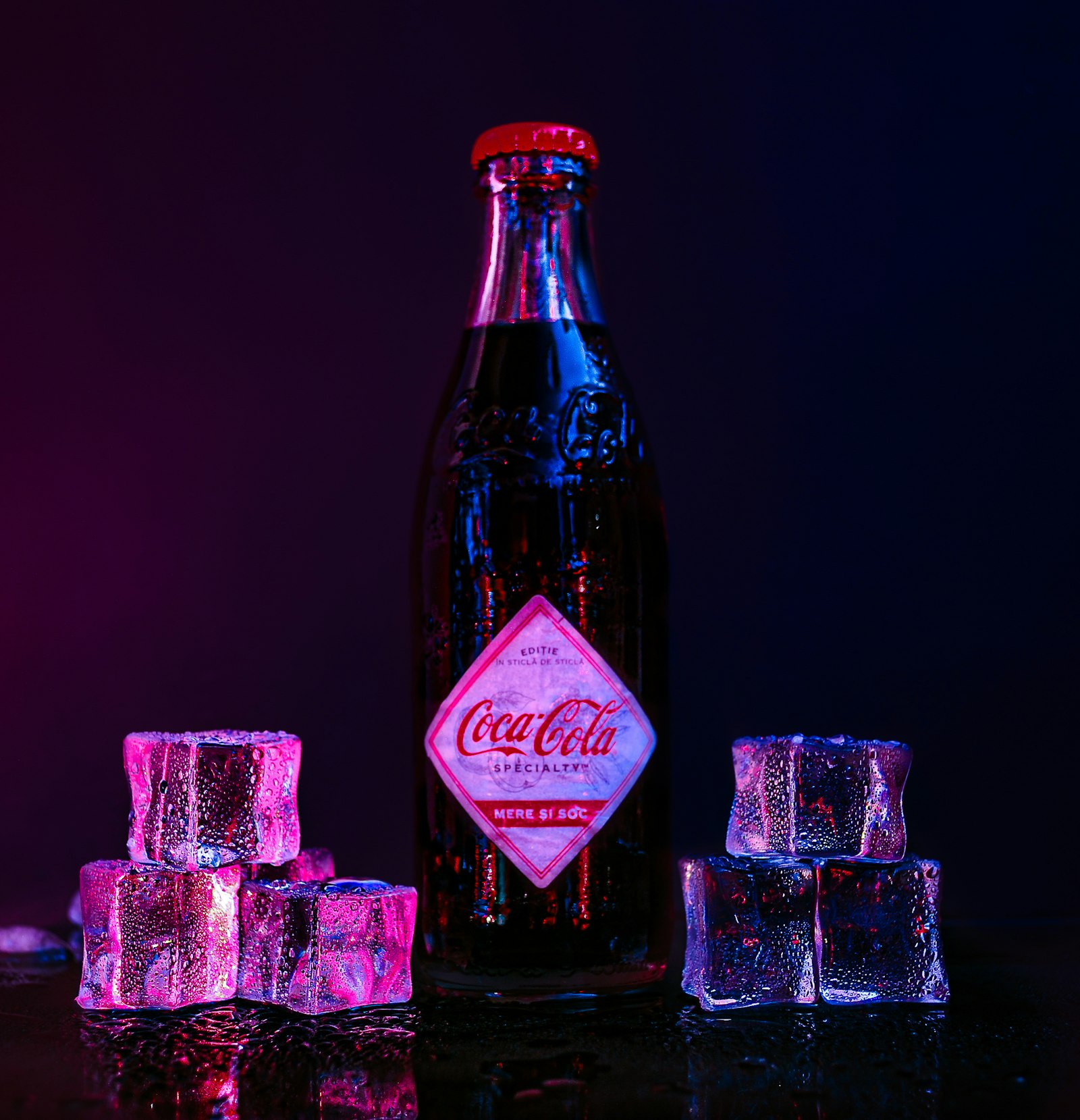
On April 23, 1985, the chairman of The Coca-Cola Company, Roberto Goizueta, walked into a press conference at Lincoln Center in Manhattan and announced that the Coca-Cola formula — the same formula that had been sold continuously for ninety-nine years, the formula whose secrecy was so famous that the company had once kept the only written copy in a vault in an Atlanta bank — had been replaced. There was a new formula. The old one was being retired. Goizueta called it the most significant soft-drink marketing development in the company's history. He was, technically, correct.
What followed was seventy-seven days of one of the most spectacular consumer revolts in American business history. The company received approximately fifteen hundred angry phone calls a day on its consumer hotline. By June, the volume had grown to roughly eight thousand calls a day. Letters arrived in mail bags. Protest groups organised. Comedians made it the central joke of late-night monologues. Truck drivers, in some American cities, refused to deliver the new product. The company's executives travelled with security detail because of the threats they were receiving.
On July 11, 1985, exactly seventy-seven days after the original announcement, Coca-Cola surrendered. The company announced it was bringing back the original formula, under a new name (Coca-Cola Classic), to be sold alongside the new one. By 1992, the new formula had quietly disappeared from American shelves. The original — back in its original packaging, with its original taste — was, for all practical purposes, restored.
This is the version of events most people know. What they tend not to know is the version that was being argued, internally at Coca-Cola, while the disaster was unfolding.
The market the company was actually losing
By the early 1980s, Coca-Cola had a serious problem that almost no consumer was aware of. Pepsi, the company's primary competitor, had spent the previous decade running a marketing campaign called the Pepsi Challenge — blind taste tests, run in malls and supermarkets across America, in which consumers were asked to taste Pepsi and Coca-Cola without seeing the labels and to say which they preferred.
Pepsi won the challenge consistently, by margins of roughly ten to twenty percent. The reason Pepsi won was straightforward and structural: Pepsi was sweeter. The two cola formulations had different sugar profiles, and in a single-sip taste test, the sweeter one won more often. Pepsi had figured this out years earlier and had built its entire marketing strategy around the result.
The Pepsi Challenge, by 1984, was no longer just a marketing campaign. It had affected market share. Coca-Cola's lead over Pepsi in the United States, which had been substantial for most of the twentieth century, had narrowed to roughly four percentage points. In supermarkets — the channel that mattered most for at-home consumption — Pepsi was actually outselling Coca-Cola in some quarters. The trend was unambiguous: Pepsi was winning the cola war on taste, and the gap was closing.
Coca-Cola's response, after a series of internal debates that ran through 1983 and 1984, was to reformulate. The new formula was tested extensively — by some accounts, in over two hundred thousand individual taste tests across multiple American cities. The results were definitive. The new formula beat the old formula in blind taste tests by margins of six to ten percentage points. It also, importantly, beat Pepsi in blind taste tests. On the data the company had, the reformulation was the right decision.
Why the data was wrong
The taste tests Coca-Cola ran were methodologically rigorous. They were conducted by professional research firms. They used proper statistical sampling. They tested across age groups, geographies, and consumption habits. The results were genuine.
What the tests did not measure — and what no one inside the company asked them to measure — was what would happen if the original Coca-Cola were removed from the market. The tests asked, Which of these two drinks do you prefer? They did not ask, How would you feel if your familiar drink, the one you have been drinking your entire life, were eliminated and replaced with something else?
The answer to the second question, when the market was forced to answer it, turned out to be radically different from the answer to the first. Consumers who in blind taste tests preferred the new formula by ten percentage points were, in the open market, viscerally angry that the old formula was gone. The preference for the new taste, when forced to choose between two drinks, was real. The attachment to the old taste, as part of consumer identity and routine, was much more important than any blind test could detect.
The miscalculation was not in the data. It was in the question Coca-Cola had chosen to ask. The company had designed a research programme to answer the wrong problem, and its research had answered the wrong problem with great rigour.
The seventy-seven days
The internal records of what happened at Coca-Cola during the spring and early summer of 1985 are, by accounts of executives who were there, harrowing. Goizueta, who had personally championed the reformulation, refused for weeks to consider reversing course. He believed — accurately, on the data — that consumers would adjust. The company doubled down on advertising support for the new formula. Bottling-plant employees were instructed to defend the change to anyone who asked. The company's PR team produced a stream of explanations about why the new formula was superior.
What the company was learning in real time, however, was that the consumer revolt was not a marketing failure that could be marketed away. Hundreds of thousands of Americans were genuinely upset. Newspaper columnists in major American cities — including writers who had never previously written about consumer products — were filing daily pieces about the betrayal. A protest group called Old Cola Drinkers of America, organised by a Seattle businessman named Gay Mullins, was filing a class-action lawsuit. The Coca-Cola customer-relations department in Atlanta was receiving so many phone calls that the company had to hire additional staff to answer them.
By late June, the company's executives — including those who had championed the reformulation — were privately conceding that the project had to be reversed. The decision to bring back the original formula was made over a single weekend in early July. The announcement, on July 11, was timed to maximise news coverage.
The announcement was carried, as breaking news, on every major American television network. ABC News interrupted the soap opera General Hospital to report it. The story dominated front pages. The Coca-Cola consumer hotline received approximately thirty-one thousand calls that day. The mood on the company's switchboards, after weeks of fury, was one of joy.
The argument that it was the best marketing in company history
Here is where the orthodox business-school account of New Coke and the more cynical account inside Coca-Cola diverge. The orthodox account treats New Coke as a textbook marketing failure — a cautionary tale about the dangers of changing what works.
A more cynical reading, which is articulated in private by some Coca-Cola insiders, runs as follows. Before the reformulation, Coca-Cola was losing the cola war and the loss was structural. Pepsi had a sweeter product, was winning blind taste tests, and was eroding Coca-Cola's market share. There was no obvious way to reverse the trend.
After the reformulation crisis, Coca-Cola had something it had not had in two decades: a deep and emotional public reaffirmation of how much consumers loved the original product. The seventy-seven-day disaster reminded an entire country, in the most visceral possible way, that they cared about Coca-Cola in a way they did not care about any other consumer product. The brand, after the crisis, was stronger than it had been before. Sales of Coca-Cola Classic — the restored original — accelerated dramatically through the late 1980s. The Pepsi Challenge stopped working as a marketing tool, because consumers who had just spent seventy-seven days proving how attached they were to Coca-Cola were no longer interested in being persuaded to switch.
By 1990, Coca-Cola had decisively retaken the lead in the American cola market and was extending it. The fundamental dynamic of the cola war had been reversed. Coca-Cola never publicly took credit for engineering the reversal through the New Coke disaster — the company's official position has always been that the reformulation was a sincere attempt to update the product that backfired. But more than one Coca-Cola marketing executive has, in the decades since, argued privately that the seventy-seven days of crisis were worth more in brand equity than any advertising campaign in the company's history could have been.
What this is actually a lesson about
The most useful lesson from New Coke, regardless of which interpretation you believe, is about the limits of A-B preference testing for products with deep cultural meaning. Almost every modern company — software companies, consumer-goods companies, media companies — relies heavily on testing to make product decisions. Many of those tests are genuinely informative. Many of them, particularly for products that customers have strong identity attachments to, ask the wrong question.
The right question is rarely which version do users prefer right now. The right question is how do users feel about the current version, and how would they feel if it were removed. The first question can be answered by a test. The second usually cannot — it requires either careful qualitative research or, in extreme cases, an actual market experiment that the company may not be willing to run.
Coca-Cola, in 1985, ran the experiment without meaning to. The experiment was financially survivable for a company of Coca-Cola's scale. For most companies, it would not have been. The next time someone presents a product change supported by overwhelming preference-test data, the question worth asking is whether the test measured preference or attachment, and whether the company is willing to absorb the consequences if the answer turns out to be different from what the data suggested.
Get The Biz Vault weekly
Original reporting and the week's markets, straight to your inbox. Free.