How Microsoft Bought an Operating System for $50,000 and Built a Trillion-Dollar Empire on It
When IBM came to Bill Gates for an operating system in 1980, Microsoft didn't have one. So they bought somebody else's for $50,000, renamed it, and licensed it back to IBM in a deal that gave Microsoft control of the personal computer industry for the next forty years.
By The Biz Vault Editorial
In July 1980, three IBM executives flew to Seattle to meet a twenty-four-year-old college dropout. IBM was in a hurry. The company had decided, in a panic about the rise of the Apple II and the Commodore PET, to build its own personal computer. The corporate culture at IBM was famously slow — a typical IBM product took four years from concept to launch. The PC project had been given twelve months.
To hit the deadline, IBM had concluded it would have to buy almost everything from outside vendors. The processor would come from Intel. The storage would come from Tandon. And the operating system, the software that would actually run the machine, would come from a small Seattle company called Microsoft.
There was one problem with this plan. Microsoft, in the summer of 1980, did not have an operating system to sell.
The first phone call, and the redirection
When IBM's representatives initially called Microsoft, Bill Gates told them — accurately — that operating systems were not Microsoft's business. Microsoft made programming languages. The company's flagship product was a version of BASIC that ran on early personal computers. For an operating system, Gates suggested they call Digital Research, a company in Pacific Grove, California, founded by a programmer named Gary Kildall. Kildall had written CP/M, which was the dominant operating system for personal computers of the period. Almost every serious PC ran CP/M.
What happened at the IBM-Digital Research meeting has been the subject of dispute for forty years. The version Kildall told for the rest of his life was that he was unavoidably absent, that his wife Dorothy received the IBM team, that IBM's confidentiality demands made it impossible for her to negotiate without legal counsel, and that the meeting fell apart over an NDA. The version IBM told was that Kildall was off flying his private plane while the deal of a lifetime sat in his lobby. Whichever version is closer to the truth, the result was the same: Digital Research did not sign a deal with IBM that day, and IBM went back to Microsoft and asked, more directly, whether they could provide an operating system after all.
Gates said yes.
The operating system Microsoft did not own
A few miles from Microsoft's offices in Seattle, a small company called Seattle Computer Products had been developing an operating system that did roughly what CP/M did, but ran on the Intel 8086 processor that IBM had selected for the PC. The OS had been written in 1980 by a programmer named Tim Paterson, mostly as a development tool to use with Seattle Computer's hardware products. Paterson called it QDOS — Quick and Dirty Operating System.
Microsoft, having committed to IBM, called Seattle Computer and offered to license QDOS. After a brief negotiation, the deal was struck: Microsoft would pay Seattle Computer fifty thousand dollars for the right to use, modify, and sublicense QDOS. Critically, Seattle Computer's owner, a soft-spoken engineer named Rod Brock, was not told who the end customer was. He sold the rights for fifty thousand dollars in cash with no royalty.
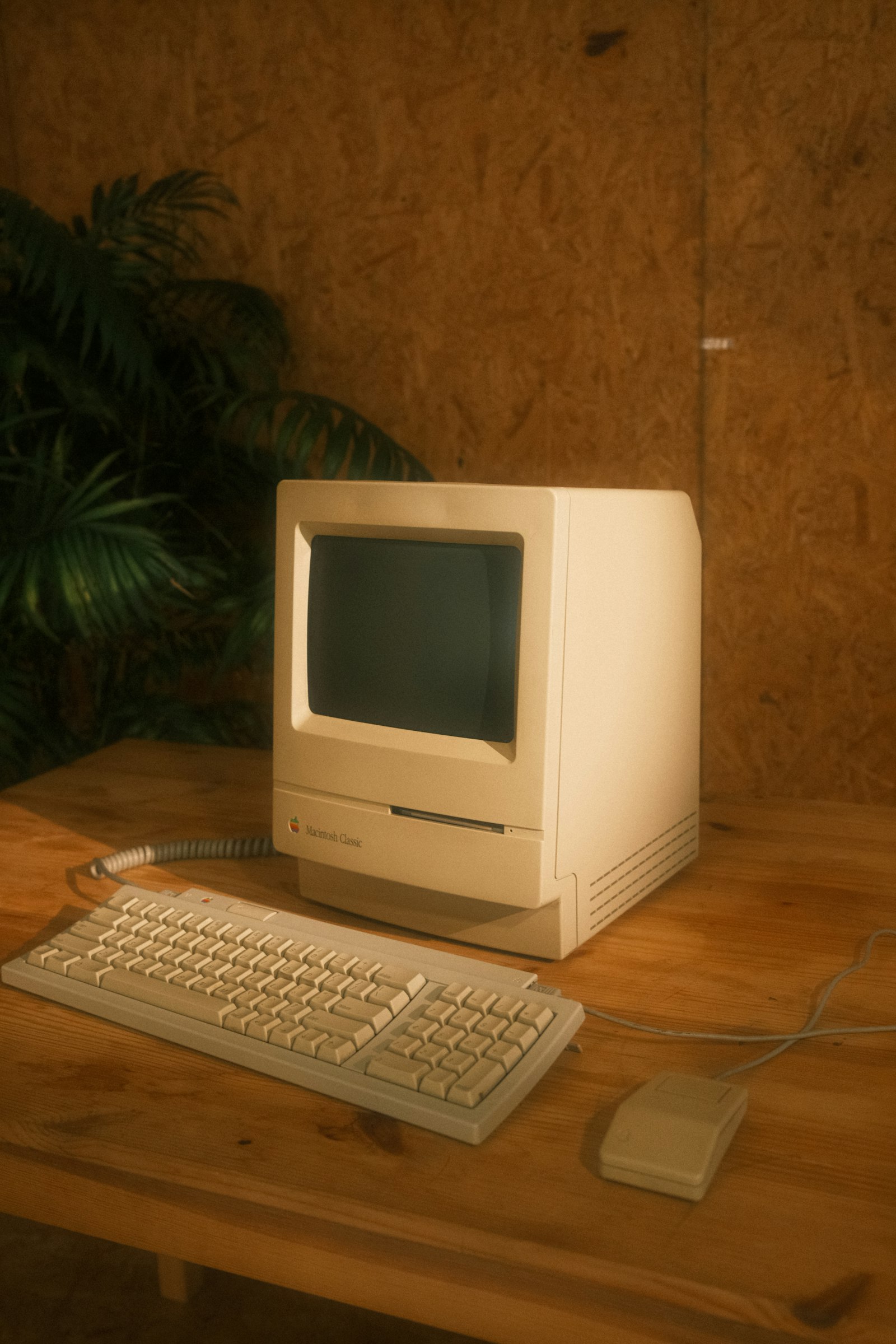
Microsoft renamed QDOS to MS-DOS, hired Paterson away from Seattle Computer to clean it up, and delivered it to IBM. The IBM PC shipped in August 1981 with MS-DOS as the operating system, branded for IBM as PC-DOS.
The licensing term that mattered
The transaction with IBM that delivered Microsoft its operating system was structured in a way that, on first reading, looked like a normal supplier arrangement. Microsoft would license PC-DOS to IBM. IBM would pay Microsoft a per-copy royalty. The PC would ship.
The clause that mattered, and that Bill Gates and his lawyers fought to include over the objections of IBM's negotiators, was that the license was non-exclusive. Microsoft retained the right to license the same operating system to any other manufacturer that wanted it.
In 1980, this concession looked harmless. IBM was the dominant force in computing. Whoever IBM chose to ship with would dominate the operating-system market by definition. There were no other significant players in personal computing capable of competing with IBM. Why would IBM care if Microsoft licensed MS-DOS to others as well?
The answer, which became apparent within four years, was that the IBM PC's hardware was assembled almost entirely from off-the-shelf components — the Intel processor, generic memory, generic drives. Anyone could build a machine that was hardware-compatible with the IBM PC. And a wave of "PC clones" — Compaq, Dell, Gateway, hundreds of others — did exactly that. Each of them needed an operating system. Each of them, because of the non-exclusive license Gates had insisted on, came to Microsoft.
By 1990, MS-DOS was running on more than a hundred million computers worldwide. IBM, the original customer, was supplying a steadily shrinking fraction of them. Microsoft, the supplier, owned the operating system that ran the entire industry.
The aftermath for Seattle Computer
Rod Brock — the man who had sold what would become MS-DOS for fifty thousand dollars without knowing what it was — discovered, only after the IBM PC launched, that his operating system was at the heart of the most consequential personal computer in history.
Seattle Computer Products sued Microsoft, alleging that Microsoft had failed to disclose what they intended to do with QDOS at the time of the original sale. The case settled in 1986. Microsoft paid Seattle Computer an additional one million dollars, and the matter was closed. Adjusted for inflation, the total Microsoft paid for the operating system that defined personal computing was approximately three million dollars in today's money.
Tim Paterson, the programmer who had actually written QDOS in 1980, did go to Microsoft and was paid market wages as a software engineer. He worked on subsequent versions of MS-DOS, then left to found his own companies. He was financially comfortable but did not become extraordinarily wealthy.
Microsoft, by contrast, used the MS-DOS franchise as the foundation for everything that followed. The cash flow from MS-DOS funded the development of Windows. The installed base of MS-DOS guaranteed the distribution of Windows. The dominance of Windows enabled Microsoft Office. The combination of Windows and Office, by the late 1990s, made Microsoft the most valuable company in the world.
What Gates actually did
Bill Gates is sometimes described, in popular history, as the inventor of personal computing software. He was not. He did not invent MS-DOS. He did not invent BASIC, though he wrote a version of it. He did not invent the windowing operating system. He did not invent the office suite. Most of the technology Microsoft built its empire on, Gates either licensed, purchased, or aggressively cloned from someone else.
What Gates did invent — or, more accurately, recognise more clearly than any of his competitors — was the structural significance of operating-system licensing. In 1980, almost no one understood that the operating system was the place where economic power in computing would accumulate. Hardware was thought to be the value layer; the software was an accessory that helped the hardware run. Gates inverted that relationship. He saw, before IBM, before Apple, before any of the hardware manufacturers, that whoever controlled the operating system would control the customer relationship, the developer ecosystem, and ultimately the economics of every other layer above and below.
The fifty-thousand-dollar payment to Seattle Computer Products for QDOS is, in this light, not the lucky purchase it sometimes appears to be. It is the moment a twenty-four-year-old recognised what an operating system was actually worth, and bought it from someone who did not.
Get The Biz Vault weekly
Original reporting and the week's markets, straight to your inbox. Free.